
Son of Surya

Coastal solar · Konkan and Goa

Solar that survives the sea.

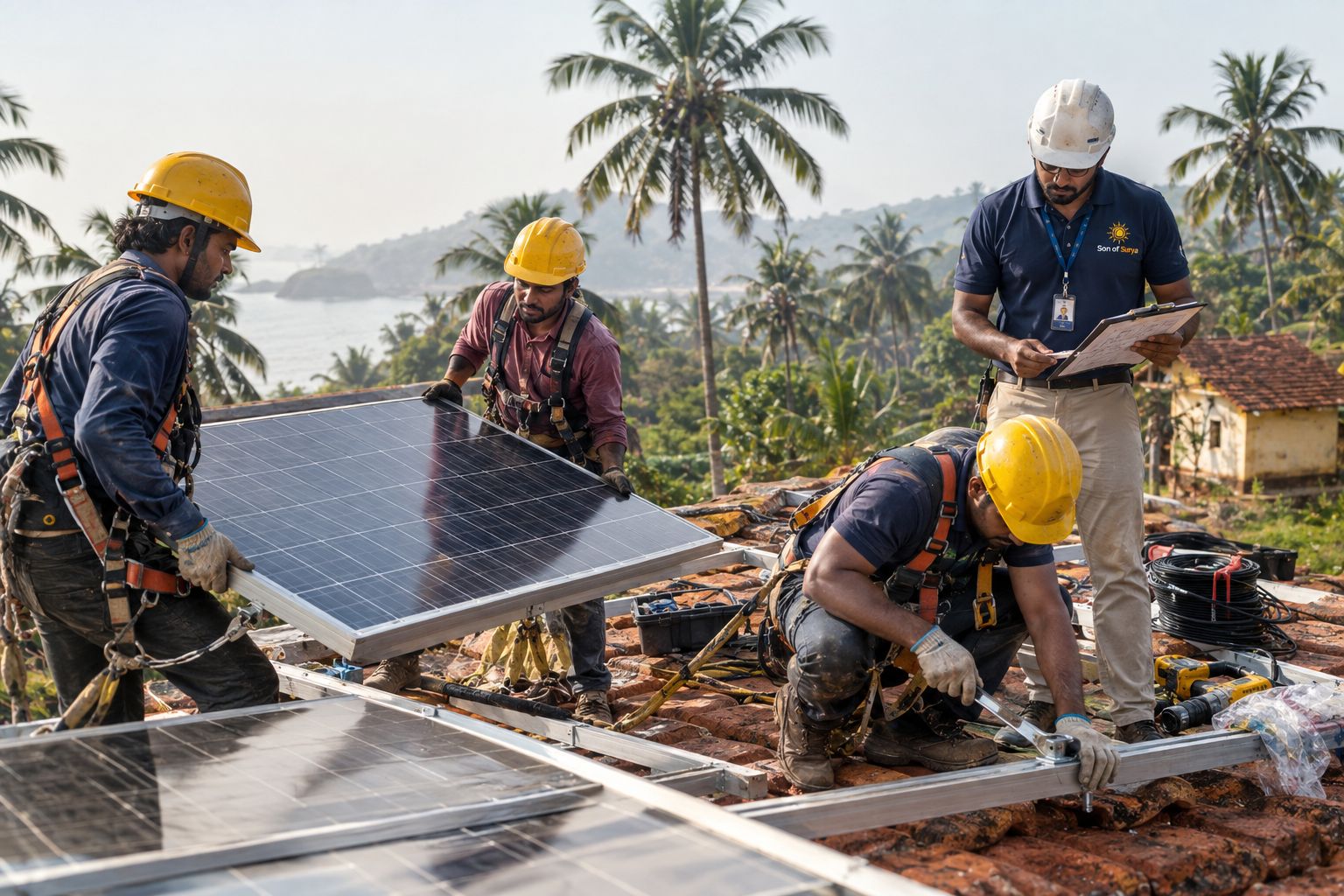
Near the coast, a cheap system can rust, leak and lose output within a few years. Built right, it lasts 25. This is our speciality.

What goes wrong

Five coastal threats, and the fix for each

Salt air

Salt mist eats ordinary steel and aluminium frames, connectors and junction boxes. Near the sea, corrosion class C4–C5 is normal.

Fix: Hot-dip galvanised or marine-grade structures, stainless fasteners, and panels tested for salt mist (IEC 61701).

Heavy monsoon

Four months of cloud and rain cut output and test every seal and cable.

Fix: Honest yearly estimates that include the monsoon dip, IP65+ enclosures, drip loops and raised inverters.

Cyclone winds

The west coast sits in high wind zones under IS 875 (Part 3).

Fix: Structures designed for your wind zone with proper anchoring, not just weighted down.

Humidity and PID

Warm, wet air speeds up potential-induced degradation and inverter faults.

Fix: PID-resistant modules, good earthing and ventilated inverter placement.

Palm and tree shade

Coconut and mango trees move shade across roofs through the day and the seasons.

Fix: A 20-minute shade walk at 9 am and 3 pm, and layouts that avoid the worst strings.

Before you sign

Seven questions to ask any coastal installer

  1. 1What corrosion class is the structure designed for, and what is the coating thickness?
  2. 2Are the panels tested for salt mist (IEC 61701) and PID?
  3. 3Which wind zone and design wind speed did you use?
  4. 4Where will the inverter go, and how is it protected from rain and heat?
  5. 5What yearly units do you promise, including the monsoon months?
  6. 6Are fasteners and clamps stainless steel?
  7. 7What does the warranty exclude for coastal sites?

Have a quote already? Our free Solar Project Passport checks it item by item.